Consolidate HR Metrics
Analyze HR data from personnel files, recruiting, and time management in one place and make it available for HR analytics.



Analyze HR data from personnel files, recruiting, and time management in one place and make it available for HR analytics.
Create recurring HR reports once, reopen them whenever needed, and use them for regular management reporting.
Grant access to metrics by role, hierarchy, or area of responsibility and protect sensitive HR data.
Excel is sufficient for individual analyses. As teams, locations, and data sources grow, figures can quickly become inconsistent. HR analytics and reporting software brings together metrics, reports, and dashboards so HR teams, management, and executives can work from the same data.
The HR reporting software from Rexx Systems makes HR metrics, reports, and charts from the Rexx Suite available in one place. It turns individual data points into a reliable basis for HR controlling and management.
With the Rexx HR Data Warehouse, you can analyze key metrics such as headcount, FTE, turnover rate, sick days, age distribution, salary trends, job applications received, and work schedule models. Reports can be generated for specific time periods, organizational units, or employee groups. Recurring reports can be saved so that monthly reports, quarterly analyses, or management reports are available more quickly at any time.
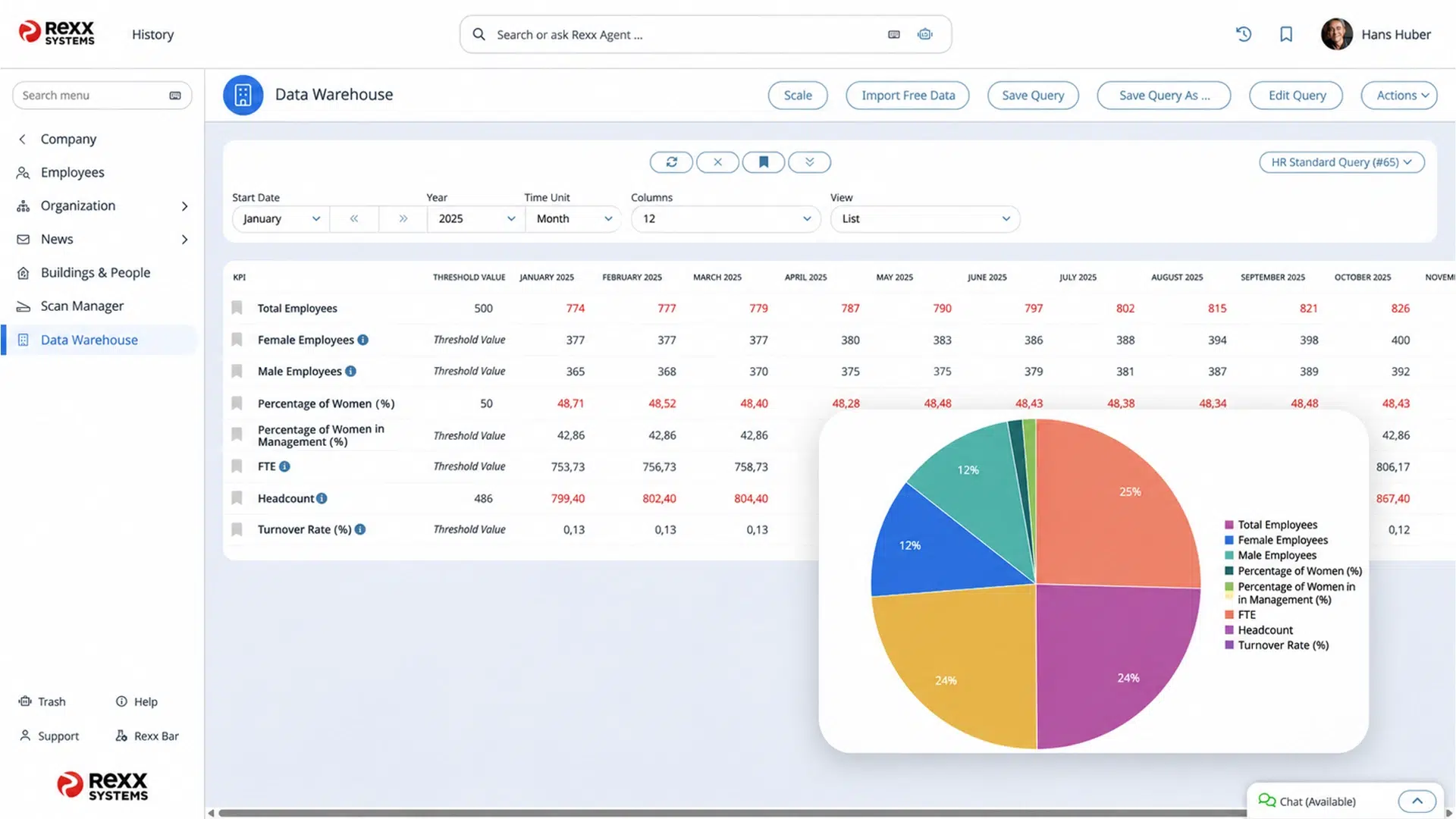
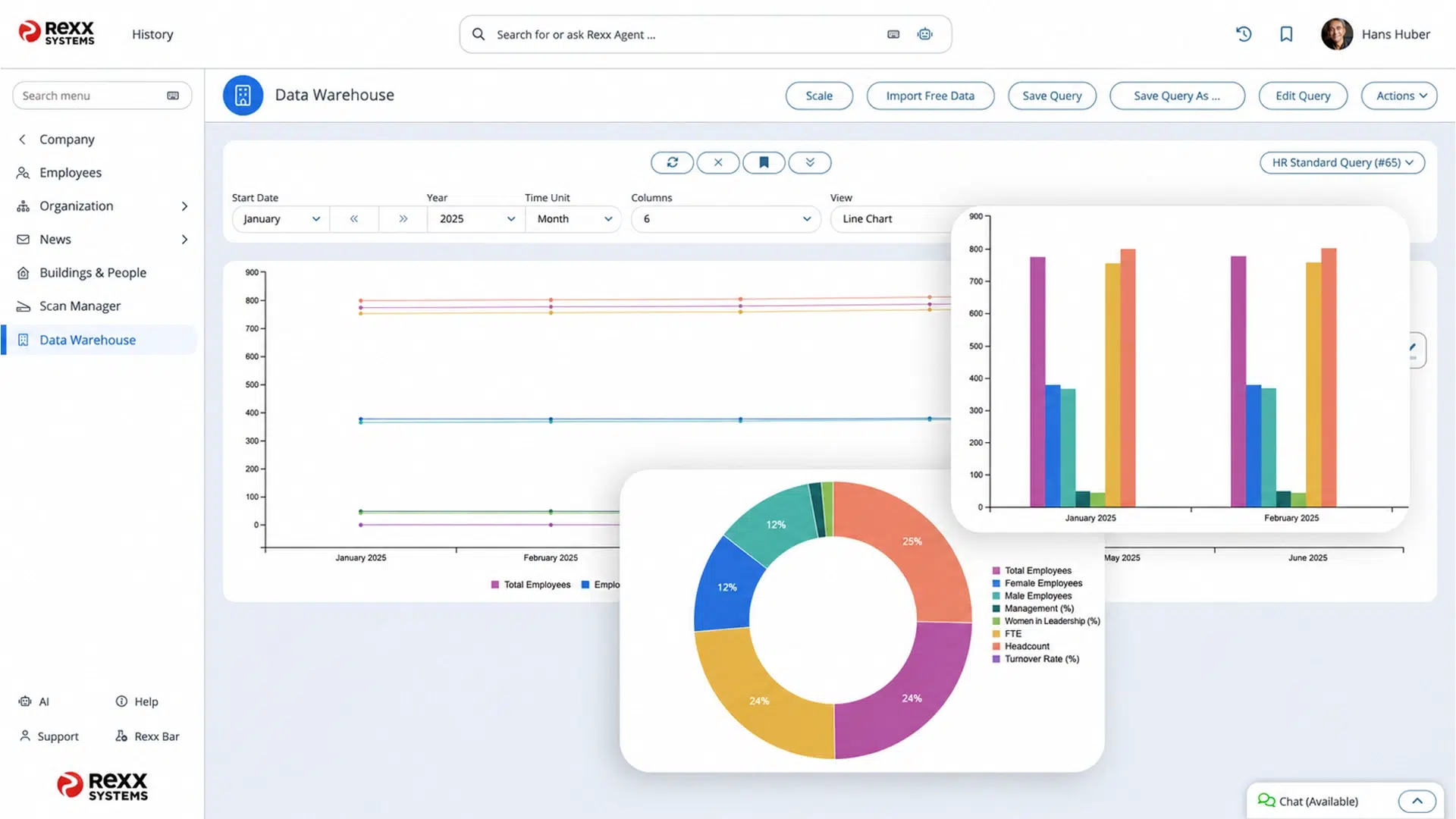
Rexx Diagrams visually displays HR metrics directly within the system. Line charts show trends over time. Bar charts compare teams, locations, or groups. Pie charts illustrate distributions, such as age structure, employment types, or work schedule models.
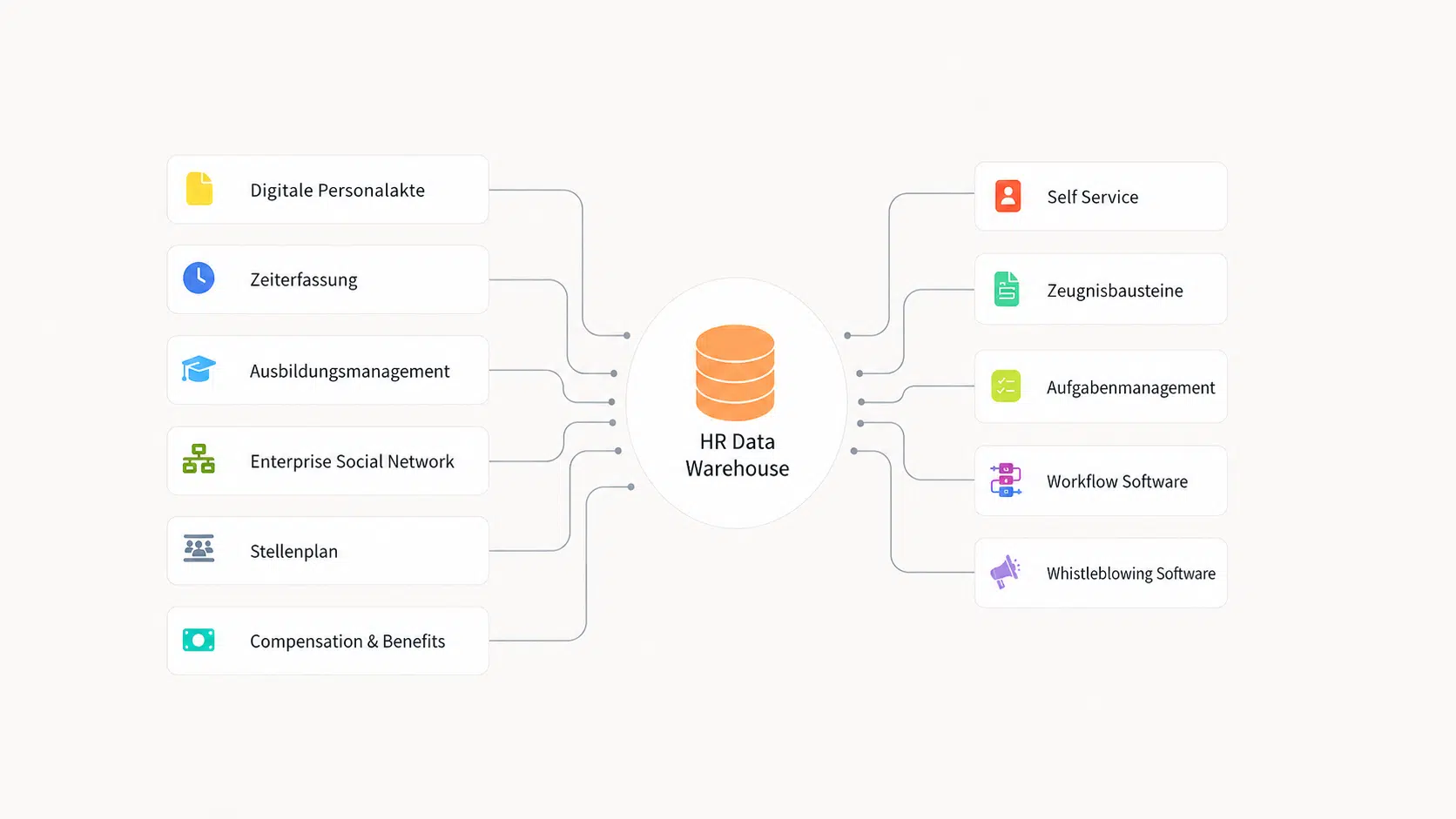
The HR Data Warehouse uses data from various areas of the Rexx Suite. These include digital personnel files, time tracking, staffing plans, self-service, compensation and benefits, training management, task management, and other modules. This allows key performance indicators to be analyzed right where the data is generated.
HR reporting software becomes worthwhile when HR metrics are regularly needed by senior management, HR controlling, or department managers. It is particularly useful for organizations with multiple locations, complex structures, a growing workforce, or numerous data sources.
Try the HR reporting software and see how Rexx Systems connects metrics, dashboards, and reports within your HR suite.
HR metrics show how workforce size, capacity, absences, and recruitment develop over time. For meaningful reports, companies should select a small number of metrics that directly support workforce planning, budgeting, retention, or hiring.
Tip: Start with five core metrics and expand your HR KPI dashboard only once responsibilities and reporting goals are clearly defined.
Headcount shows how many employees work in a company, at a particular location, or within an organizational unit. This metric supports workforce planning, budget discussions, and growth analyses.
FTE stands for full-time equivalent and indicates how much workforce capacity is actually available. This metric is particularly important for part-time arrangements, job sharing, and capacity planning.
The employee turnover rate shows how many employees leave the company within a given period. It helps HR assess retention, leadership, and employee development more effectively.
Absence figures show the number of sick days or other absences across teams, departments, or periods. They help identify workload pressures, patterns, and capacity risks sooner.
Recruitment metrics show incoming applications, open vacancies, and progress through the selection process. This helps HR determine whether positions are being filled quickly enough and where bottlenecks arise.
Bring HR metrics, reports, and dashboards together for centralized analysis.
The HR Data Warehouse can use data from digital personnel files, time tracking, position planning, and other Rexx modules for reporting. This enables analyses of headcount, FTE, absences, employee turnover, and organizational structure.
HR analytics software helps HR controlling teams assess trends in headcount, absences, FTE, employee turnover, and salary structure more quickly. The HR Data Warehouse provides saved reports, filters, and charts for this purpose.
Applicant tracking generates important recruitment data, including incoming applications, open vacancies, and process stages. Recruitment metrics with Rexx Vacancy Analysis also help the team identify which positions require particular attention.
Yes. HR analytics and reporting software can provide managers with approved metrics for their areas of responsibility. They can view team size, absences, working time models, or open vacancies without having to ask HR for each figure.
Artificial intelligence in business can help HR teams find information more quickly and prepare analyses more efficiently. For reporting, it remains essential that metrics are transparently derived from structured HR data.